
01
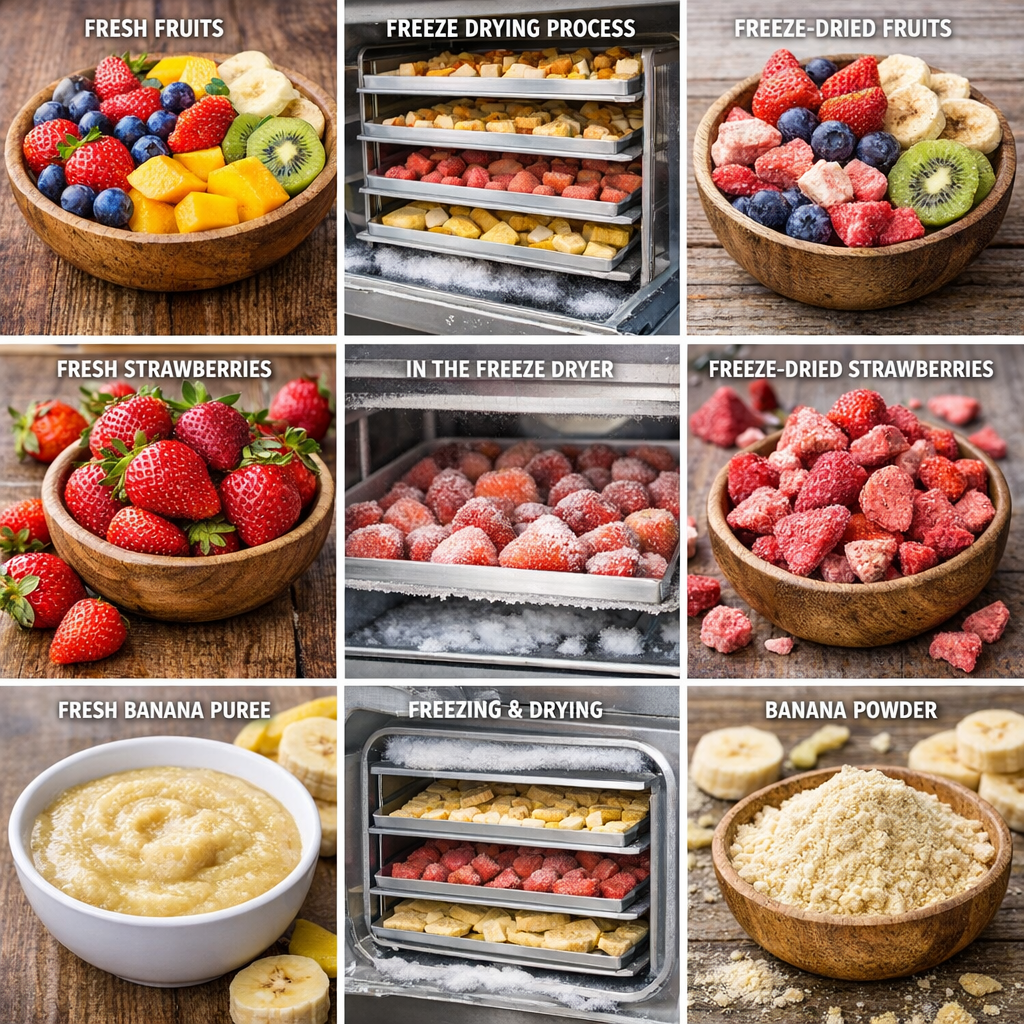
Tropical Fruit
Snacks, ingredients, toppings, and higher-value product formats.
We separate application ideas from documented case evidence and do not publish client results that cannot be verified.
These categories show technical exploration areas, not claims that a specific client project has been completed.
Snacks, ingredients, toppings, and higher-value product formats.
Meal components that benefit from rehydration and lower weight.
Herbal and botanical materials for ingredient development.
Exploration across meat, seafood, and protein ingredients.
Applications across dairy, beverage, culture, and formulations.
A useful case study needs to provide more than a before-and-after image.
Starting condition, preparation, and use context are documented clearly.
The trial must answer an explicit objective.
Actual data and observations are used to evaluate feasibility.
The study explains what the technical result means for product, cost, or scale-up.
Yield is highly material-dependent. Using another material's number as a promise for a new project can be misleading.
An application is a use category. A case study is a real trial with documented input, process, observations, and results.
No. Publishing evidence must respect commercial confidentiality and the consent of the parties involved.
Share the material, current condition, estimated volume, target product, and commercial objective. We start with a technical assessment before production planning.